If you’ve spent time in the lumber and building materials world, you know uncertainty isn’t new. For most independent dealers, it’s practically a business partner. Markets rise and fall. Interest rates climb. Labor becomes harder to find. Regulations shift. Yet every year, independent yards across the Northeast open their doors, take care of customers, and keep communities building.
But something is different now.
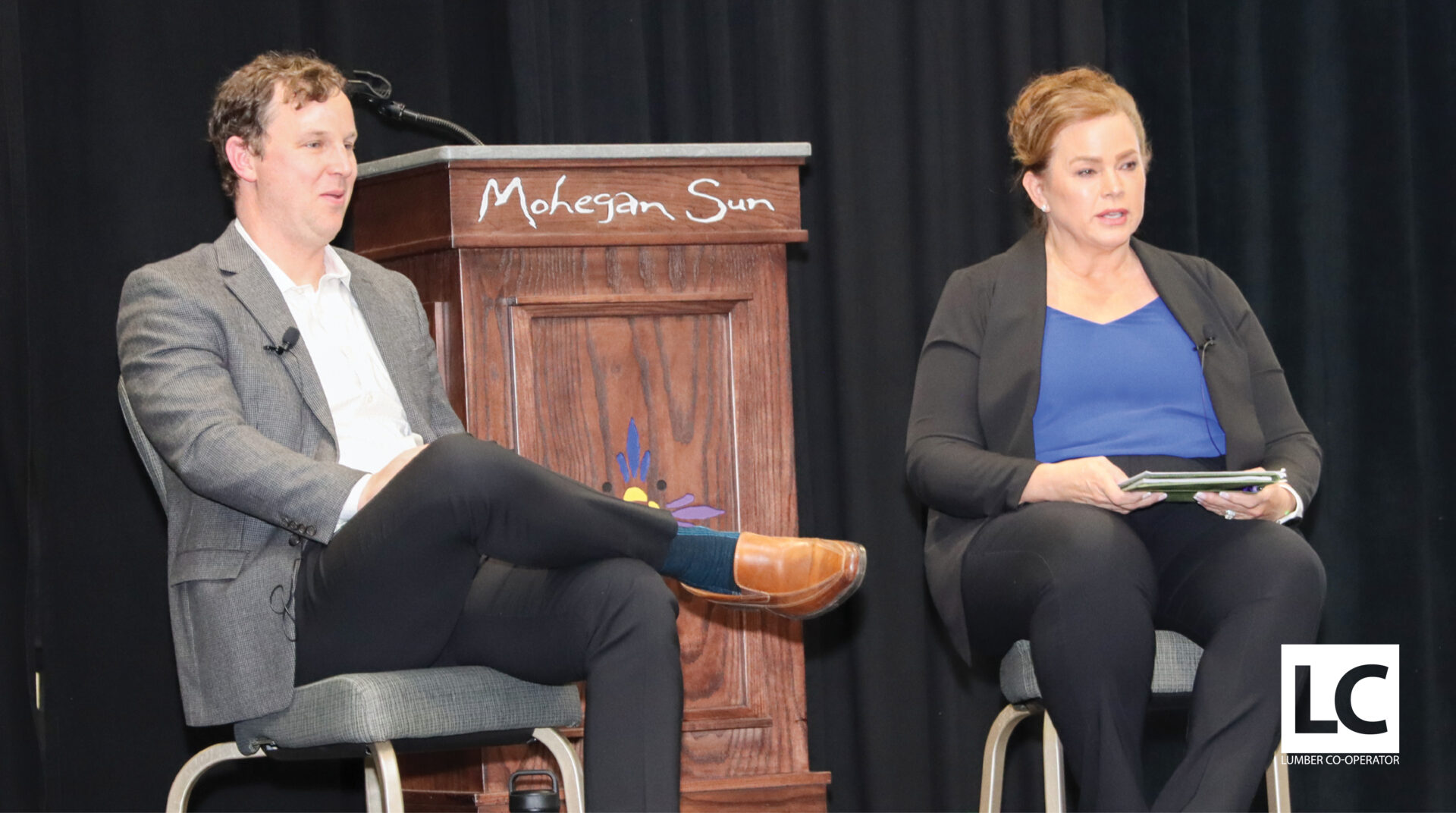
At this year’s LBM Expo, Sam Brownell and Dena Cordova-Jack shared a message that resonated with owners and leaders: The next chapter for independent dealers will not be won by chance. It will be won through leadership clarity, operational discipline, and intentional succession planning.
Between the two of them, one comes from the “I’ve lived inside the beast” camp (Cordova-Jack), and the other from the “numbers are telling us something” camp (Brownell). They reached the same conclusion: the companies thriving today embrace discomfort, not avoid it.
Leadership in Uncertain Times
Leadership comes first, because everything—retention, profitability, culture, and continuity—flows from it.
Earlier, when Cordova-Jack became director of sales for Foxworth-Galbraith’s mountain region, the company was transforming as it neared the one-billion-dollar mark. The shift from operationally driven to sales-driven created silos, strained communication, and a culture lacking strategy.
Then the economy shifted—fast. A deep recession forced a pivot. Instead of accelerating growth, the company had to stabilize, communicate clearly, and align operations and sales. That period shaped a core lesson they shared with attendees:
• When the market turns, companies don’t fail because of strategy. They fail because of misalignment.
• Leaders who thrive communicate early, clarify expectations, and show up predictably. Teams don’t need perfection—they need consistency.
Retention Isn’t About Perks, It’s About Purpose
Retention pressure isn’t going away. Employees aren’t asking if they have a job; they’re asking if they have a future.
Companies keeping their best people provide development pathways, reinforce stability, document processes, and create cultures where people feel seen, valued, and included—it’s about purpose. Making it easy to stay and easier to grow.
The Hardest Part: Succession
Succession is no longer a topic “five or 10 years out.” It is strategic and affects valuation, operations, and culture. Many owners at this session expressed uncertainty about successors, talent gaps, and owner dependency.
One of Brownell’s examples was a longtime owner who centralized decisions, unintentionally creating a business that couldn’t operate without him. Fixing it might be possible, but not easy. Proactive succession planning is absolutely critical.
Succession is a multi-year process built on reducing dependency, developing leadership strength, documenting knowledge, aligning culture, and designing a financially viable transition.
A Framework for the Future
We closed with a five-part framework: leadership clarity, documented operations, financial transparency, deliberate talent development, and succession readiness. This key framework provides two things money can’t buy: stability and momentum.
If you left the conference feeling challenged or uncomfortable— good. That’s where growth starts. Independent dealers are positioned to win—you’re closer to customers, faster to decide, and deeply connected. Brownell and Cordova-Jack stated that their goal is simple: to help prepare you for tomorrow while honoring the foundation you’ve built.