The LBM industry is no stranger to the challenges that come with persistent labor shortages, increased product costs, and trying to do more for less. The question is: How can dealers weather the storm and move forward? In a nutshell, by improving operational efficiency. There are LBM facilities—lumberyards and distribution centers—across the country that could reap significant efficiency gains from a warehouse upgrade.
How a well-designed warehouse increases operational efficiency and lowers costs.
Poor flow, labor-intensive handling, and damaged material are the main factors that drive up controllable costs. An efficient warehouse design with the right racking and storage systems helps address these issues.
Case Study 1:
Distribution Center for Windows, Doors, and Millwork
Before the upgrade, product was scattered throughout multiple storage facilities, and some was stored on the floor, propped up against walls. Locating and picking product was extremely time-consuming and inefficient.
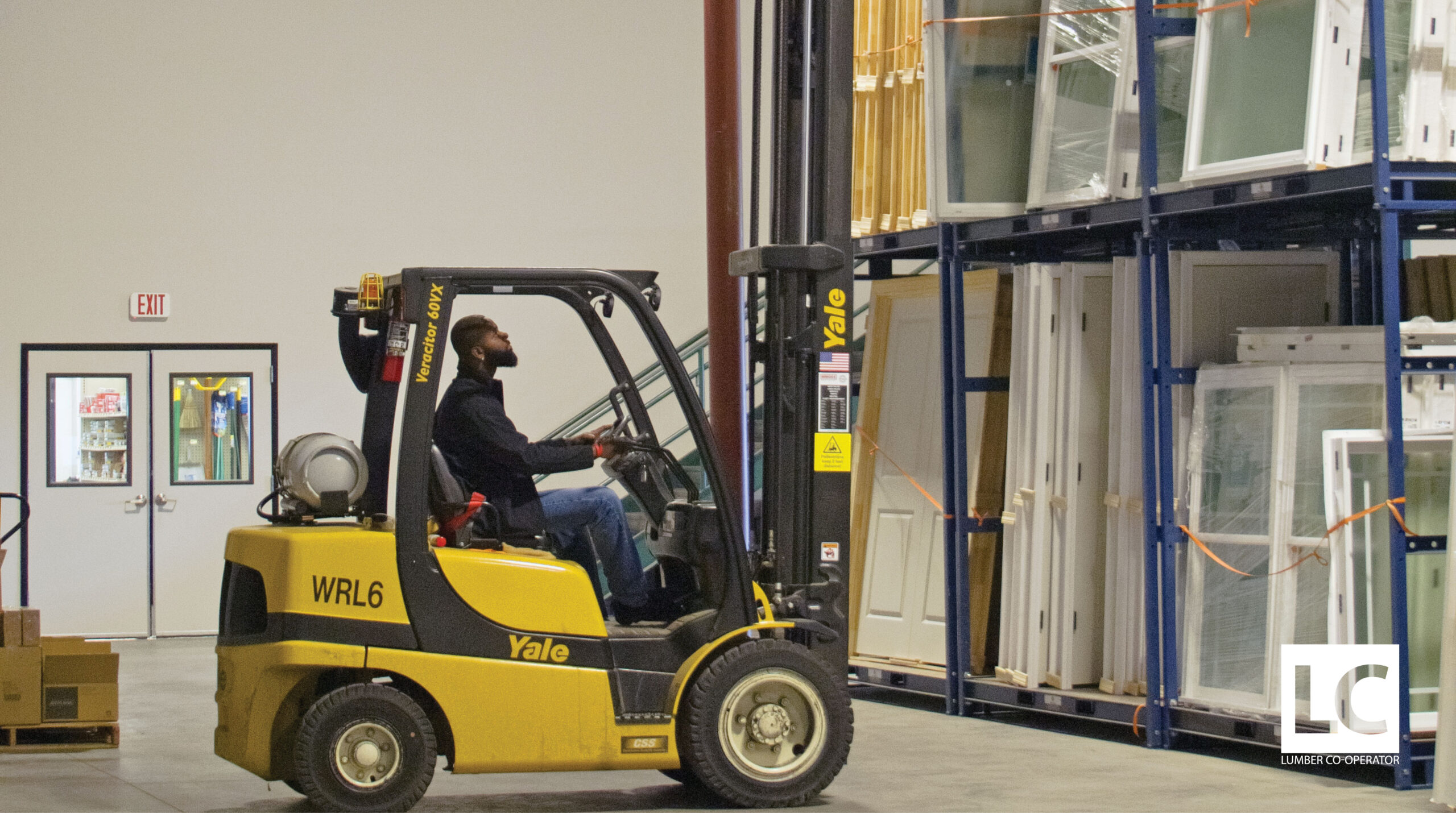
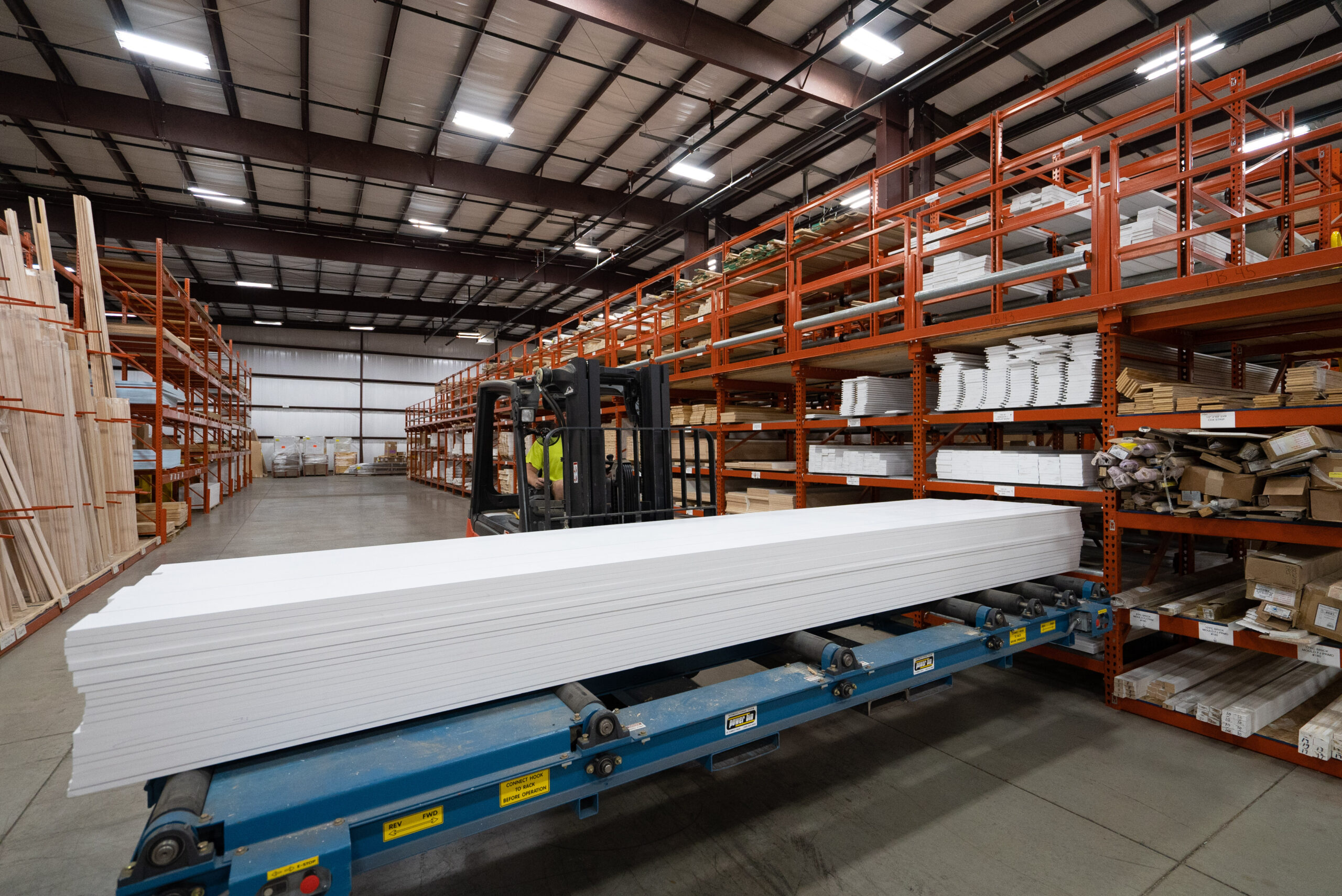
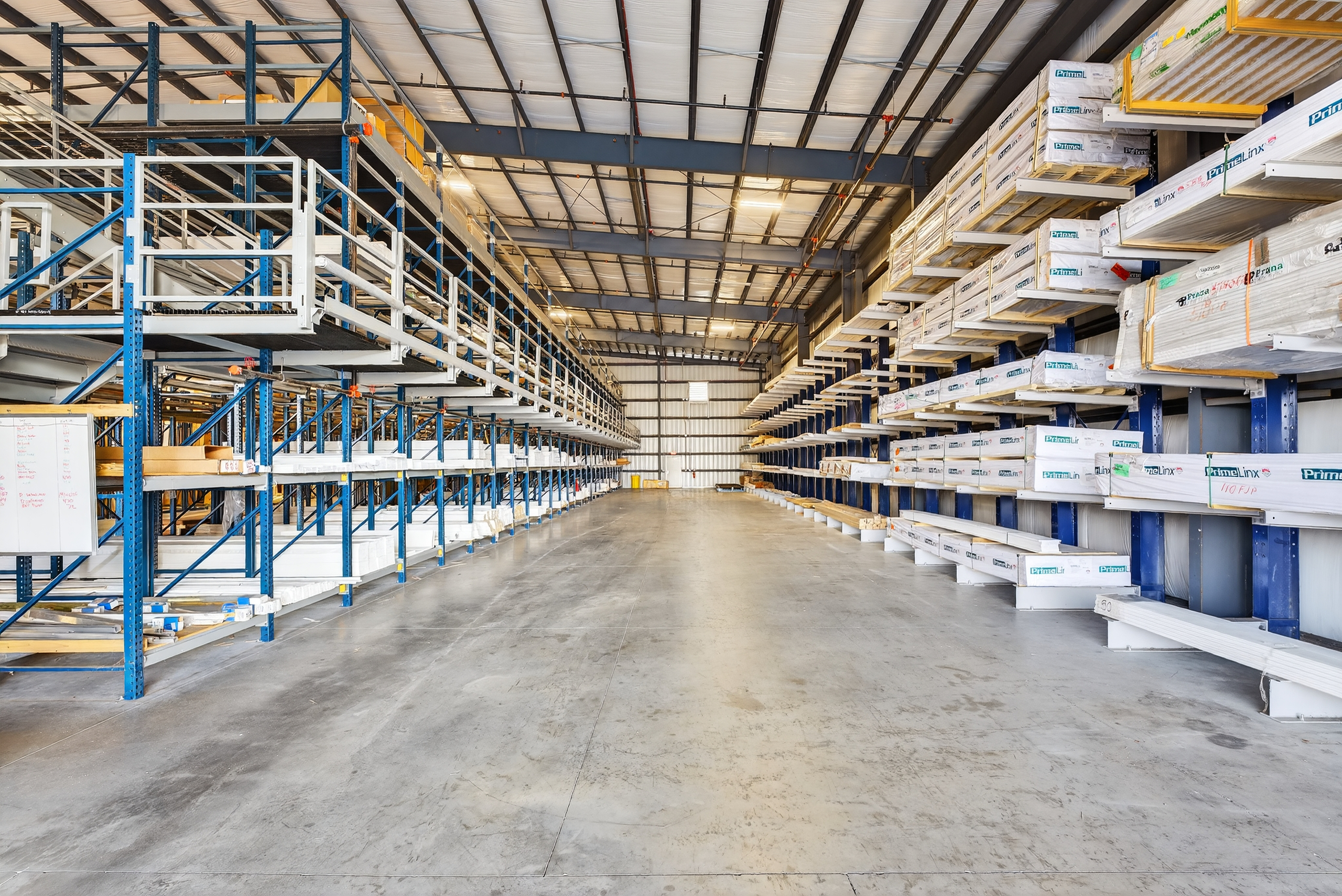
After the upgrade, everything was under one roof, and all 600 SKUs were properly stored, reducing damage. A mix of standard and custom steel racks efficiently utilized horizontal and vertical space, and a battery-operated loader enabled staff to quickly and safely load lumber, plywood, and molding.
Furthermore, the client reported that:
• Trim orders were picked 50% faster.
• Product identification improved.
• The facility attracted new customers.
• All customers purchased more product categories.
Case Study 2:
Warehouse Serving Residential and Commercial Customers
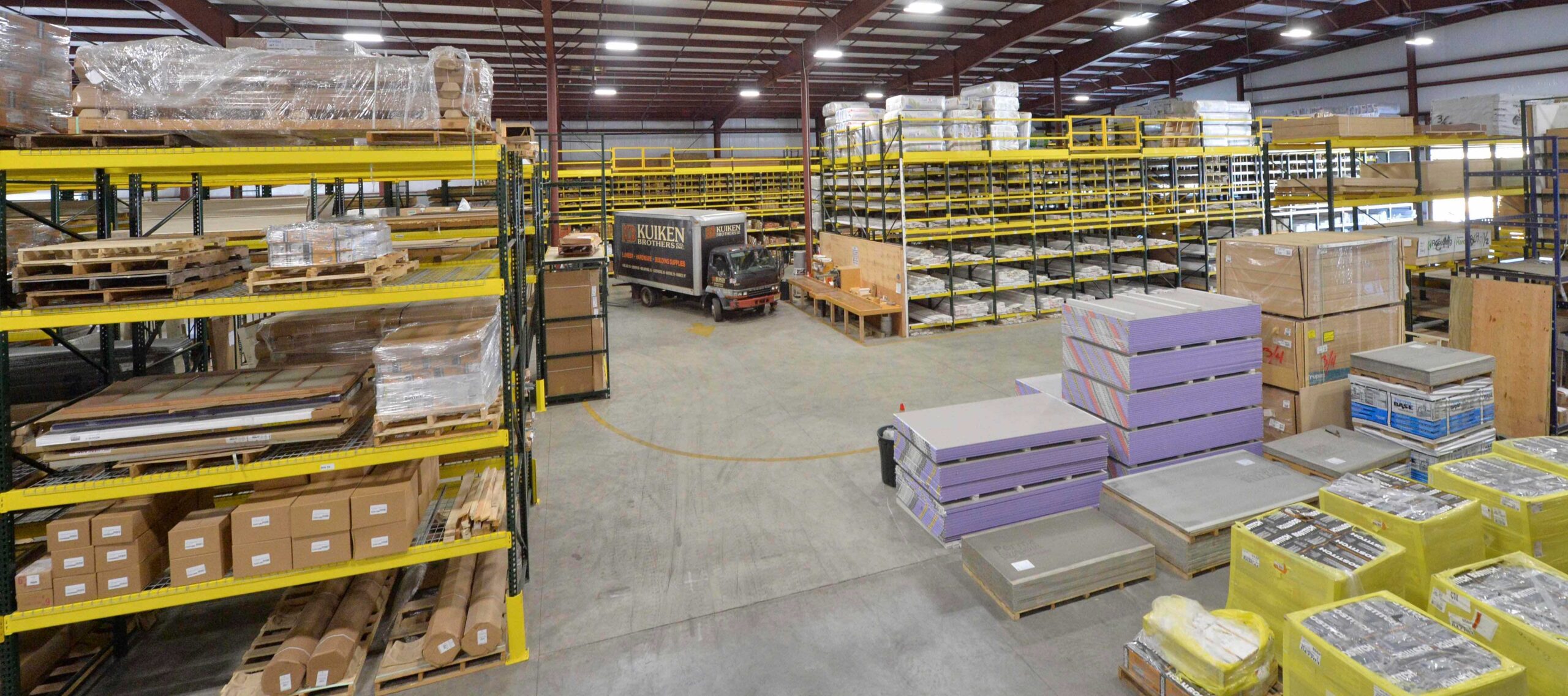
Here, the goal was to give cars and trucks smooth and speedy direct access to product. The right buildings and racking systems achieved this while increasing inventory and delivery capabilities. Among the systems utilized were:
• L-sheds for engineered wood products storage and I-beam cantilever racks for PVC and composite decking.
• Mezzanine for millwork storage: Primary storage is on the floor level, with the products standing in bays of racking and conveniently separated by dividers. Lighter-weight items are stored above on the mezzanine.
• Millwork stack racks: Movable, stackable storage systems for windows, doors, and other products. They can stack up to three high and be easily loaded onto trucks or assembly areas.
All of these systems resulted in:
• Increased efficiency overall in picking orders and stocking inventory.
• Reduced damage.
• A safer environment for employees and clients.
• An overall improved customer experience.
What would your warehouse upgrade look like?
No two yards or distribution centers are the same. It takes a lot of careful attention to detail to design the warehouse that’s right for your operation. Ultimately, the design and storage systems need to work for where you are today and also allow for your future growth.
Upgrading your warehouse starts with understanding your current and future operational requirements and goals, doing a thorough analysis of your SKUs and inventory turnover, and documenting your existing building and rack layouts. Based on this information, a designer can then develop a plan that includes:
• Any additional buildings that are needed.
• Warehouse flow.
• Storage for bulk and ground-stacked products.
• Racking systems and their layout.
• Product slotting with planograms.
When the project is completed, you will have a safe, efficient facility that meets your present and future needs and, most importantly, drives increased sales.
This article and photos were provided by the CT Darnell team. CT Darnell is a lumber and building material facility expert providing racking systems and building construction for lumberyards nationwide. They can be reached at info@ct-darnell.com or 800-353-0892.
To read more articles like this, subscribe to the LC. To subscribe or receive a complimentary copy of the LC, click your preferred version: DIGITAL PRINT
Only NRLA members can receive the LC in print by mail.