
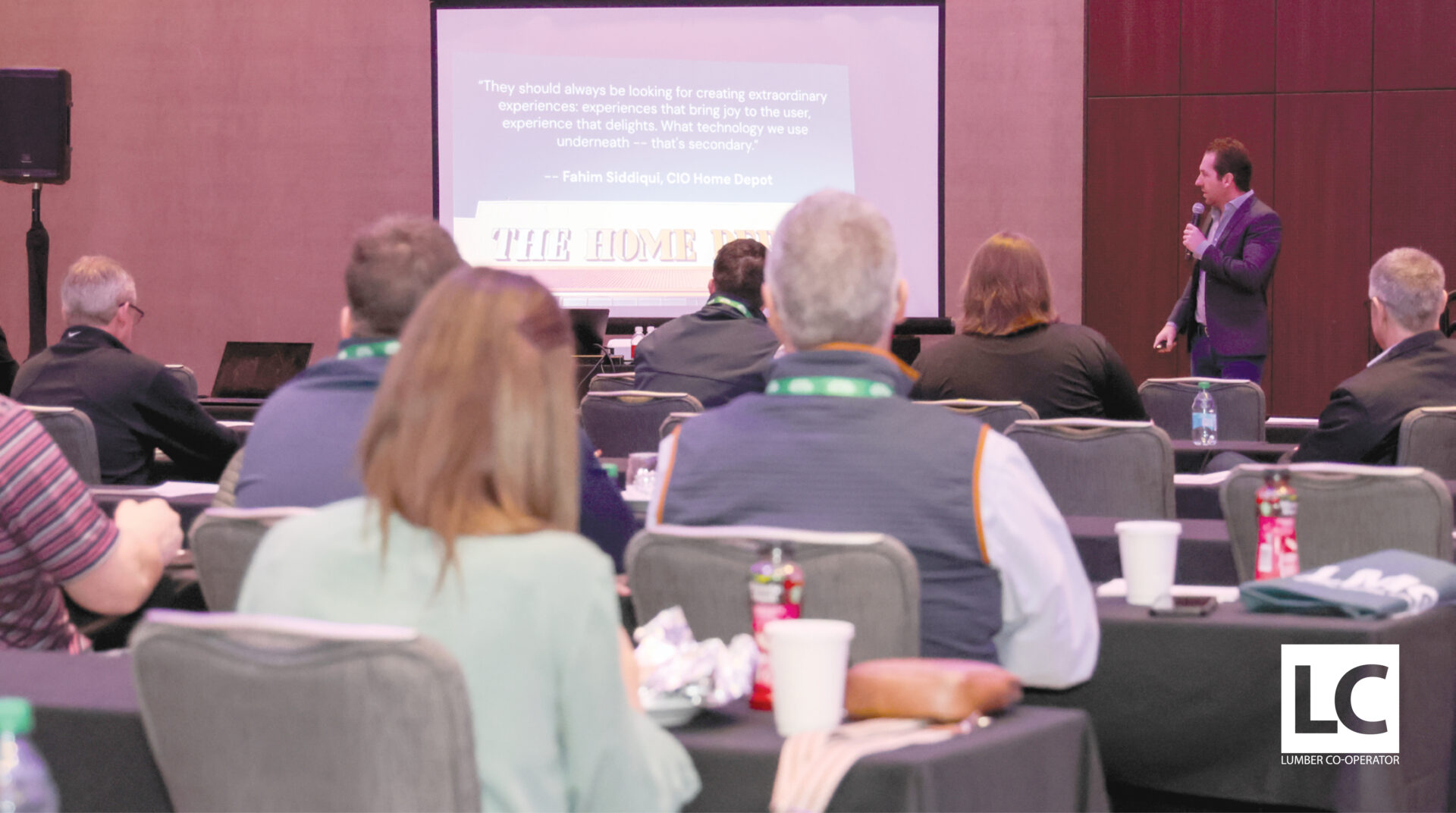
Zach Williams, founder of Venveo, shared a useful framework for leveraging artificial intelligence to drive significant business growth. Titled “AI Ascension,” the presentation offered a strategic roadmap for organizations to move beyond mere adoption and achieve true transformation through AI. He emphasized that while AI is becoming increasingly intelligent, the real challenge lies in using it intelligently by starting with clear business problems rather than the technology itself.
At the core of strategy was the “AI Ascension” framework, a three-tiered model that guides companies from foundational efficiencies to groundbreaking innovations. The journey begins with Efficiency, where AI is strategically applied to automate and accelerate routine, high-frequency tasks that consume valuable time.
While data shows that many individuals participate in activities like managing emails, expenses, and to-do lists, the penetration of AI in these areas remains surprisingly low, typically between 18% and 25%. This highlights a significant, untapped opportunity for businesses to boost productivity by integrating AI into their daily operations.
The next level of the framework is Enhancement, which focuses on improving human capabilities. This is particularly evident in creative workflows, where AI has achieved much higher penetration rates.
For instance, AI assistance in writing support has reached a 51% penetration rate among those who participate in the activity. Similarly, AI is making significant inroads in creating images (34%), presentations (38%), and even music and audio (37%). These tools are not replacing human creativity but augmenting it, allowing teams to produce higher quality work faster than ever before.
The final and most aspirational stage is Breakthrough, where AI is used to achieve transformational outcomes and solve complex problems at scale. There is a recent Nobel Prize in chemistry that was awarded to scientists who used AI to design proteins. It is a powerful example of AI’s potential to revolutionize entire fields.
In the business world, this translates to developing new products, services, and business models that were previously unimaginable. A striking example from the creative industry is Tyler Perry’s decision to halt an $800 million studio expansion, citing the rapid advancements in OpenAI’s video generation model, Sora, as a testament to AI’s disruptive power.
We also showcased practical, industry-specific applications of AI that are driving revenue today. In the building materials sector, for example, AI can process lists of addresses to generate hyper-personalized marketing materials, including custom mailers, targeted ad creative, and tailored proposals.
This capability allows businesses to move from a one-to-many to a one-to-one marketing approach at scale. Another compelling case study came from Lemonade Insurance, which now uses AI to write 98% of its policies, handle 98% of first claim notices, and process 50% of claims instantly, all while maintaining a high customer satisfaction score of 4.3.
So, how can organizations begin their own AI ascension? Williams outlined a clear, three-step process: Experimentation, Integration, and Collaboration.
1. Experimentation: Start small by identifying simple, low-risk opportunities to use AI in areas like email, design, data analysis, or customer response. The goal is to evaluate constraints and discover potential areas for improvement without making significant upfront investments.
2. Integration: Once successful experiments are identified, the next step is to integrate these findings into your team’s existing workflows and activities. It is crucial to establish clear metrics for success and ensure that the technology is being used to solve a real problem, not just for the sake of using a new tool.
3. Collaboration: Finally, foster a culture of collaboration by sharing your findings across the organization. Encourage team members to learn from each other’s successes and failures, creating a virtuous cycle of continuous learning and improvement across the entire organization.
In conclusion, the session provided a clear and actionable framework for any organization in the industry looking to harness the power of AI.
The key takeaway was that successful AI adoption is not just about technology; it’s about a strategic, problem-focused approach that empowers people, refines processes, and builds organizational capability over time.
By starting with small, iterative transformations, businesses can mitigate risk, build momentum, and ultimately position themselves for the larger, breakthrough transformations that will define the future of their industries.
Zach Williams is the founder of Venveo, a digital marketing agency focused on building material manufacturers, and is the host of the Smarter Building Materials marketing podcast. Williams is known for his expertise in digital marketing for building material manufacturers to increase sales. Williams has received numerous Webby Awards and has been recognized in the Wall Street Journal.