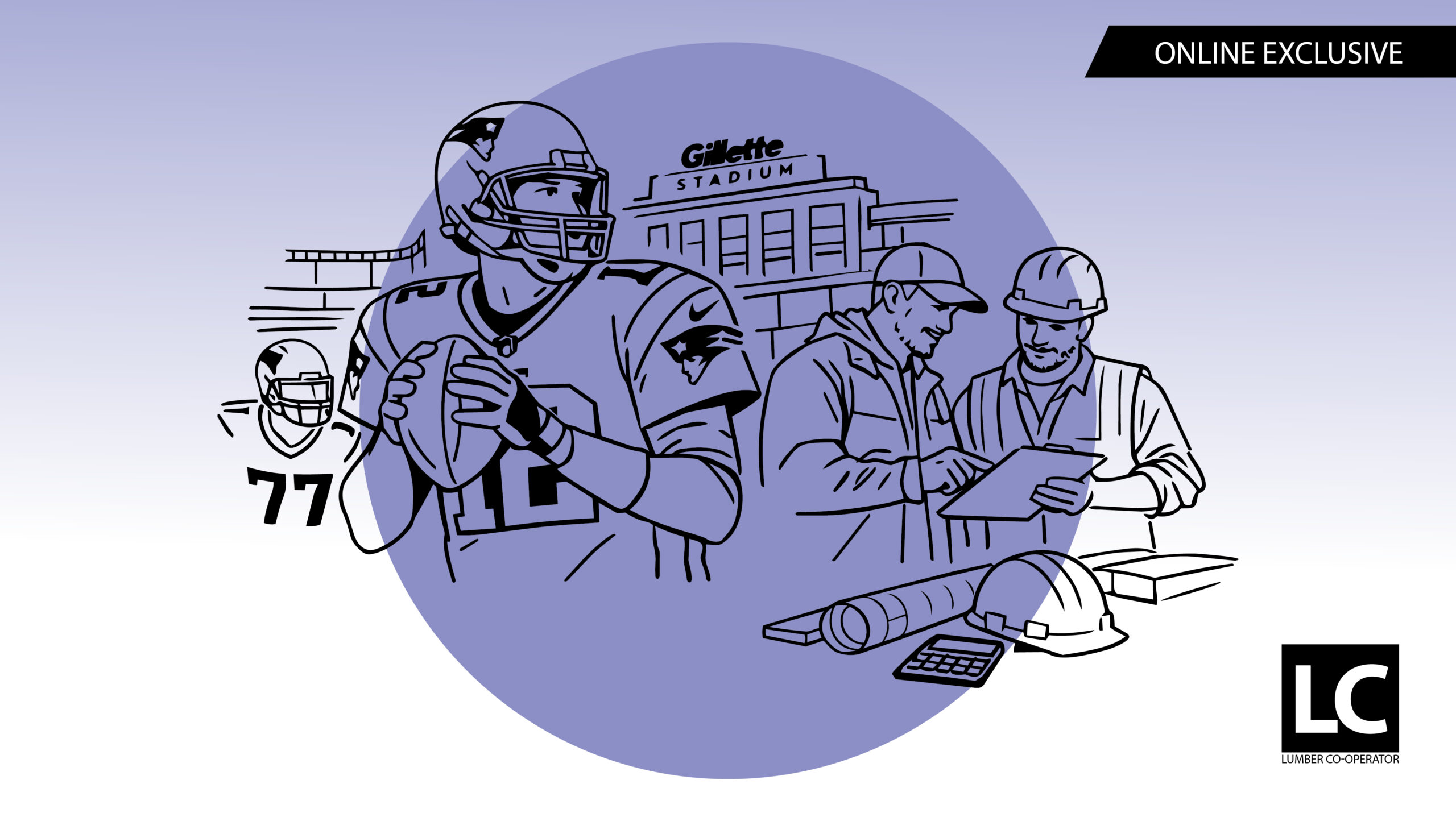
For the past 25 years, the New England Patriots haven’t just had a good run—they built one of the most dominant stretches of success professional sports has ever seen. Year after year, they were in the hunt (with the exception of 2020-2024). They didn’t simply “get hot” for a season or two. They became a “standard.”
To fans, it looked like magic. To competitors, it looked unfair. But to anyone who paid attention to how the Patriots operated behind the scenes, their success wasn’t mysterious at all. It was built on discipline, preparation, and a relentless commitment to doing the little things right.
And for those of us in the LBM industry, that story should hit close to home.
Because while LBM dealers aren’t competing for Lombardi trophies, we are competing every day. We compete for customer loyalty, for a larger ‘wallet-share,’ for greater gross margins, and for the kind of reputation that keeps customers coming back. The competition may not be on a football field, but it’s definitely real, and the margin for error is just as small.
One of the biggest misconceptions about the Patriots dynasty is that it was simply the result of having a few superstar names. (The naysayers might point to “defaltegate,” but as we New Englanders say, “They hate us ‘cause they ain’t us.”) Yes, they had elite talent. But talent alone doesn’t build sustained excellence. What built it was culture. The Patriots developed a mindset that everyone in the organization understood and lived by. “Do Your Job” wasn’t just a catchy phrase; it was the expectation. It meant that every player had a role, every role mattered, and excuses weren’t part of the vocabulary.
That concept translates directly into how the best LBM businesses operate. Every dealer has some good people, and some have at least a few standout performers. But the companies that truly separate themselves are the ones that create a culture of consistency and don’t accept employees who don’t do their job as well as they’re capable. They don’t rely on one “hero salesperson,” or one “miracle dispatcher” to fix the problems created by others, or one purchasing manager to always pull a rabbit out of a hat when inventory gets tight. Instead, they build a culture that makes the entire team stronger.
That kind of culture also makes the fundamentals matter again. The Patriots weren’t known for being flashy every week. They weren’t always the most exciting team in the league. But they were almost always the most prepared. They were disciplined, they executed, and they didn’t beat themselves. They made their living by doing the basics better than everyone else.
In the LBM industry, fundamentals don’t make headlines either. But they make money. They protect relationships. They prevent small mistakes from turning into big problems. Fundamentals are returning phone calls, emails, and texts promptly. They’re following up on quotes. They’re asking better questions before throwing out a price. They’re confirming specs and quantities. They’re communicating lead times clearly. They’re getting ahead of jobsite issues before the customer calls angry. They’re checking to make sure everything is running smoothly.
Most salespeople don’t lose business because they’re bad at selling. They lose business because perhaps they haven’t been trained properly. Or they’re inconsistent, get comfortable, skip steps, or make assumptions. And in our competitive market, assumptions are expensive.
Like strong football teams, strong dealers build processes that allow the business to perform even when staffing changes. That doesn’t mean treating people like interchangeable parts. It means setting the company up to succeed by creating repeatable systems and clear communication. It means the customer isn’t dependent on one person but rather the entire team to get things done correctly.
The Patriots were also famous for preparation. They watched film relentlessly, studied opponents, identified patterns, and adjusted as deemed necessary. They didn’t ignore mistakes or cover them up. Instead, they reviewed what happened and made sure it didn’t happen again.
LBM companies can do the same thing, and the ones that do tend to outperform the ones that don’t. “Watching film” in our industry is reviewing why a quote was lost, not just shrugging and saying, “I guess they were cheaper.” It’s looking at margin performance by salesperson and category, not just celebrating sales volume. It’s identifying why there are delivery issues, why greater than normal returns are happening, and why customers are calling the competition for material that should have been purchased from you. It’s understanding what’s happening and why with less than acceptable close rates, too many special-order mistakes, recurring customer complaints, etc.
The companies that win long term, don’t just blame the market. They study the market, learn from the numbers, improve processes, and correct mistakes early, before the mistakes become the culture.
And perhaps the most important lesson of all is that championships are won in the trenches. Patriots fans remember the big moments—the dramatic drives, the game-winning plays, the iconic Super Bowl comebacks. But those moments don’t happen without the work that most people don’t notice. Blocking, tackling, coordination, and execution.
LBM works the same way. Sales can sell it, but operations have to deliver it. If the material is wrong, if the delivery is late, if the material is damaged, or if the communication falls apart, it doesn’t matter how strong the relationship is. Customers remember the pain and the problems. Contractors don’t have time for “almost right.” And they know they have options as to where to buy their materials.
The most successful dealers understand that teamwork isn’t a nice idea—it’s a business strategy. When sales and purchasing communicate constantly, fewer promises are made that can’t be kept. When credit and sales collaborate early, fewer accounts spiral into problems. When inside and outside sales work as one, customers feel supported instead of being bounced around. When dispatch and the yard team are aligned, deliveries run smoother and mistakes decrease.
That’s how winning happens. Not through one person, but through teamwork.
The Patriots didn’t dominate for 21 of the last 25 years because they were lucky. They dominated because they were intentional, were disciplined, and held standards. They focused on fundamentals, built systems that survived change, and prepared relentlessly. And they operated like one team.
LBM businesses that want to thrive would be wise to take note. The companies that will lead their markets and become highly profitable aren’t just going to be the ones with the biggest yards, the most trucks, or the broadest inventory. They’ll be the ones with the strongest culture, the most consistent execution, and the best teamwork from the counter to the yard to the job site. As you know, Together Everyone Achieves More.
In football, they call it a dynasty. In the LBM industry, we call it a well-run business. And both are built the same way … one disciplined day at a time.
Mike McDole has 40+ years of actual LBM experience, including being SVP of a large regional pro-dealer, and is the principal of Firing Line LBM Advisors. He’s also partners with Greg Brooks of the Executive Council on Construction Supply and his LMS. Mike can be reached at 774.372.1367 or Mike@FiringLineLBM.com.