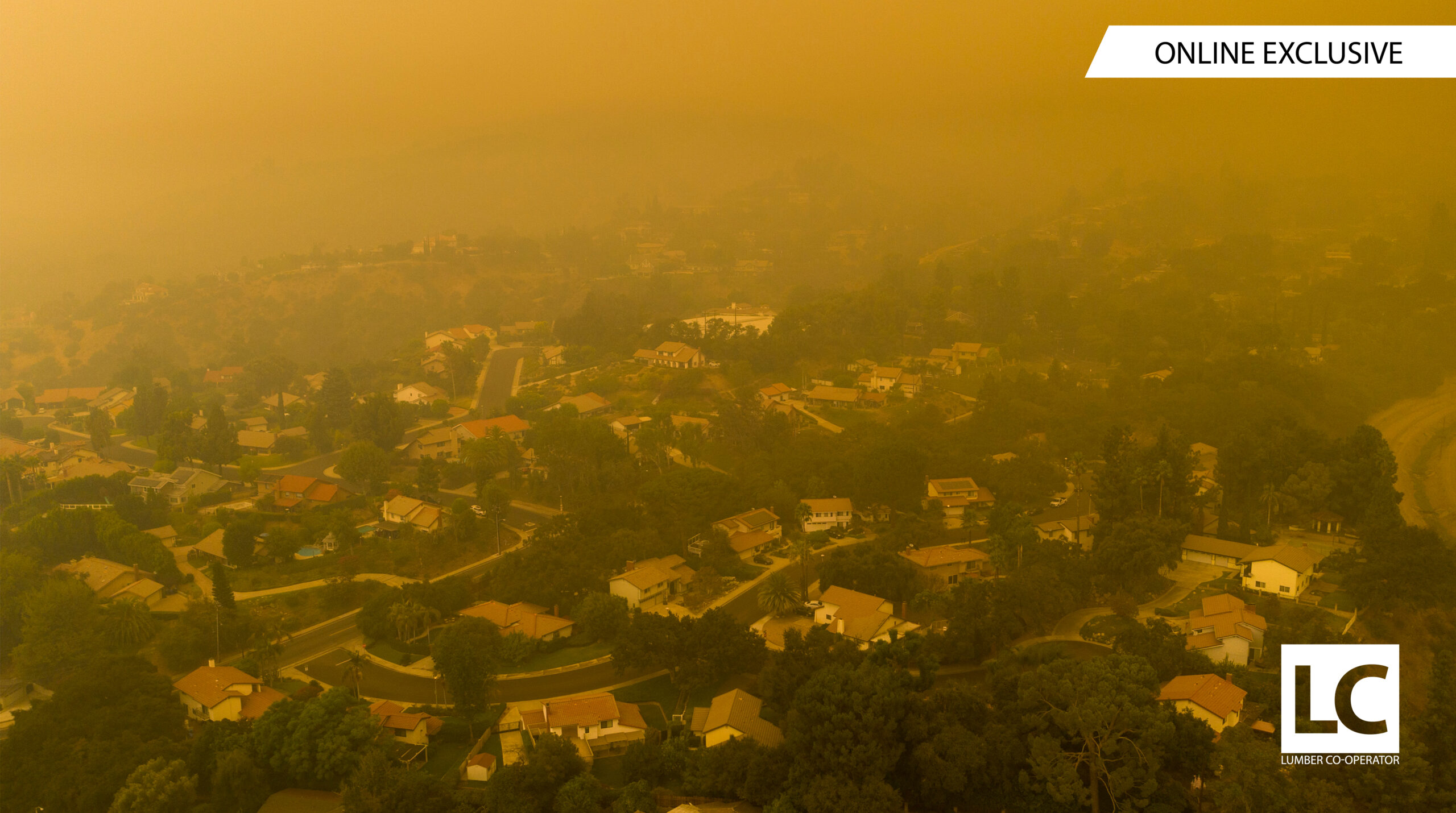
Wildfire smoke is a mix of gases and fine particles released when vegetation, structures, and other materials burn. It contains carbon monoxide, hydrocarbons, benzene, aldehydes and particulate matter, and the exact mixture varies depending on what is burning, the weather, and how far the smoke has traveled. The health effects on workers can include eye irritation, sore throat, coughing and wheezing, along with flare-ups of asthma, chronic obstructive pulmonary disease, bronchitis, and pneumonia. Research also points to cardiovascular effects and adverse birth outcomes tied to smoke exposure. Workers with existing heart or lung conditions and older and pregnant workers face elevated risk, but anyone doing physically demanding work outdoors during a smoke event is breathing in more smoke simply because they are breathing harder.
Wildfire seasons have grown longer across much of the country, and smoke from a fire hundreds of miles away can still push local air quality into unhealthy territory. There is no federal OSHA standard written specifically for wildfire smoke, but OSHA can and does cite employers under the General Duty Clause when workers face a recognized hazard without reasonable protection. California, Oregon, and Washington have each adopted permanent rules regulating on-the-job wildfire smoke exposure, and employers in those states have specific obligations tied to Air Quality Index (AQI) thresholds.
These nine best practices give employers a starting point for protecting workers from wildfire smoke dangers.
1. Understand the AQI and PM2.5
Most guidance on wildfire smoke is built around the AQI and a specific pollutant called PM2.5. PM2.5 is fine particulate matter with a diameter of 2.5 micrometers or smaller, small enough to travel deep into the lungs and, in some cases, enter the bloodstream. It is generally considered the most harmful component of wildfire smoke. The AQI translates measured or forecasted PM2.5 concentrations into a single number from 0 to 500, paired with a color and category ranging from “good” to “hazardous.” As the number rises, so do the health risks to workers, and the category triggers specific actions in most smoke response plans. Using AQI categories to set your own internal action levels gives supervisors a consistent, defensible basis for decisions rather than relying on visual judgment of how smoky the air looks.
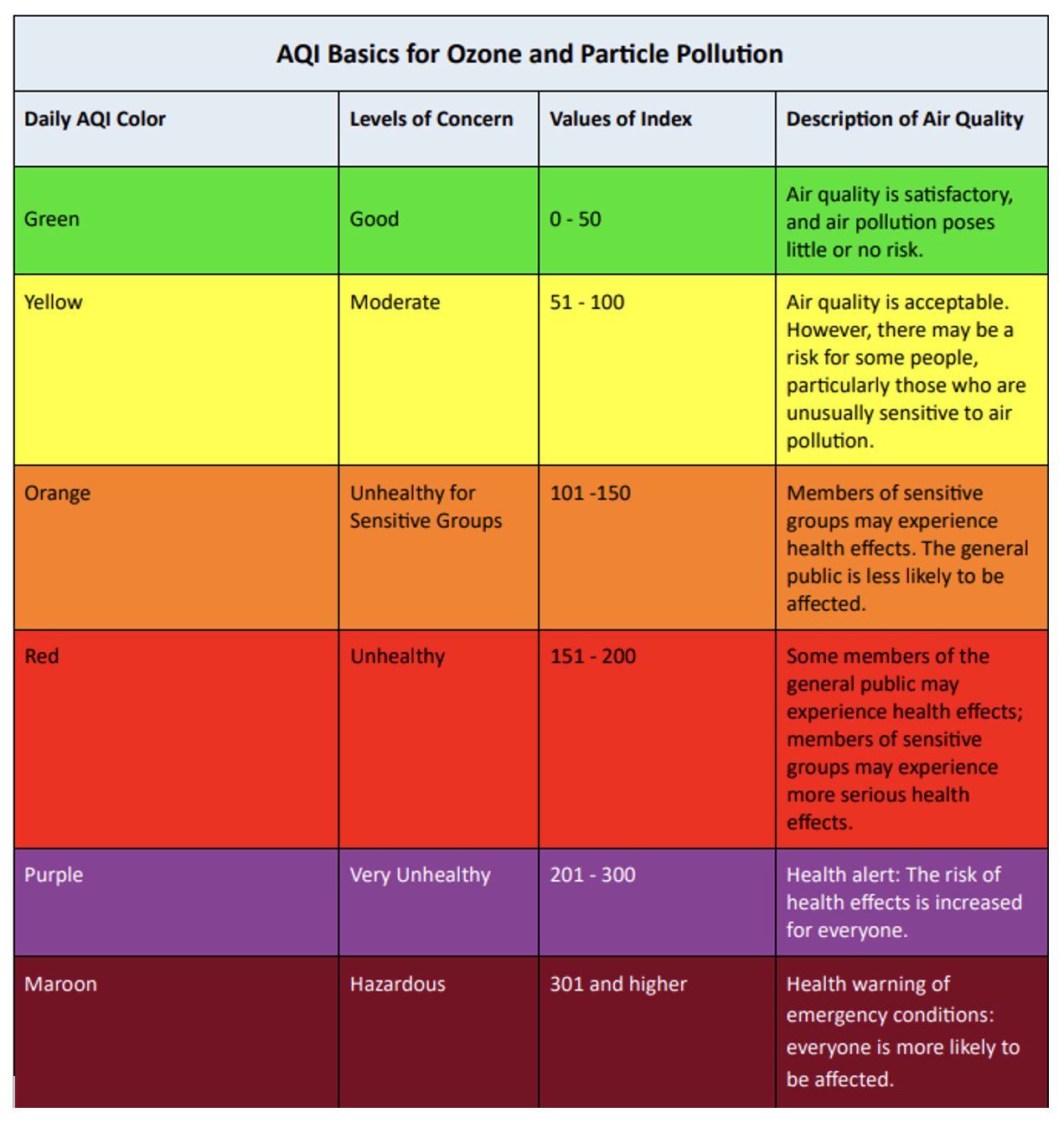
Source: AirNow.gov AirNow is a partnership of the U.S. Environmental Protection Agency, National Oceanic and Atmospheric Administration (NOAA), National Park Service, NASA, Centers for Disease Control, and tribal, state and local air quality agencies.
2. Monitor Air Quality and Wildfire Smoke Conditions
Checking AQI before work commences, at the start of each shift, and periodically throughout the day is the basis for protecting workers from wildfire smoke. Several free tools make this available. The EPA’s AirNow site and its companion U.S. Fire and Smoke Map provide current and forecasted AQI by location and overlay active fire and smoke plumes. The U.S. Forest Service’s AirFire portal and the Interagency Wildland Fire Air Quality Response Program offer similar forecasting geared toward active fire events. State air resource boards and local air quality management districts often provide additional local detail, particularly useful for facilities near a specific fire source. Some employers supplement these public tools with their own direct-reading PM2.5 monitors on-site, which can be useful at facilities with frequent door traffic, loading docks, or other points where outside air enters the building. Additionally, many weather apps include AQI readings alongside weather forecasts. Whoever is assigned to check conditions should also know what internal action level triggers a response so monitoring translates into a decision rather than just a data point.
3. Train Employees on Wildfire Smoke Hazards
Employee training should occur before wildfire season begins, and workers should receive refresher training as needed as conditions change through the season. At minimum, employee training should cover the health effects of smoke exposure; how to read AQI reports and what each category means for the work being done that day; the symptoms of smoke-related illness and when to seek help; and how to properly wear, store, and inspect a respirator if one is provided. Supervisors should receive additional training on making real-time calls, such as when to slow work down, when to relocate a task indoors and when a worker’s symptoms warrant medical attention. Workers who understand why a precaution exists, rather than just being told to follow it, are more likely to follow safety procedures related to wildfire smoke.
4. Establish Communication Processes
Employers should decide in advance how AQI updates and related instructions will reach employees during a smoke event, whether through text alerts, radio check-ins, posted signage at entrances, or announcements at the start of a shift. The message should include the current AQI category, the precautions currently in effect, and who to contact with questions or symptoms. Just as important, the process should provide workers a clear, low-friction way to report smoke-related symptoms or concerns without fear of retaliation.
5. Reschedule or Relocate Work Tasks
When conditions allow, shifting outdoor work to a time of day with better air quality, often the early morning before smoke settles in, or moving it indoors to a filtered space, can meaningfully cut a worker’s total exposure. Tasks that can reasonably wait a day, or that do not require outdoor conditions at all, should be the first candidates for rescheduling when AQI climbs. This requires enough flexibility in scheduling to make quick adjustments, and it works best when supervisors have already been given the authority to make that call.
6. Reduce Physical Exertion During Smoke Events
Heavier exertion means faster, deeper breathing, which means more smoke reaching the lungs. When AQI reaches unhealthy levels, look for ways to lighten the physical demands of the work still being done outdoors, including slowing the pace, adding workers to spread out a heavy task, or pushing the most strenuous jobs to a day with cleaner air. This precaution matters most for new employees who have not yet built up tolerance for the work and for anyone with a preexisting respiratory or cardiovascular condition.
7. Require Frequent Breaks in Smoke-free Areas
Workers need regular access to a space with clean, filtered air, whether that is an air-conditioned break room, a vehicle cab, or another properly enclosed area. As AQI worsens, break frequency should increase in frequency and length. Make sure workers actually take these breaks rather than pushing through discomfort to finish a task, and make sure supervisors model that behavior themselves rather than treating breaks as something to skip when the schedule is tight.
8. Provide Respiratory Protection
For many employers, a respirator is one of the simplest controls available for limiting exposure to the particulate matter in wildfire smoke, and in some situations, it may be the only practical option, particularly when relocating work, adjusting schedules, or reducing exertion cannot bring exposure down enough on their own. NIOSH recommends approaching this through the hierarchy of controls, meaning respirators should generally supplement other exposure controls rather than serve as the sole line of defense.
NIOSH-approved filtering facepiece respirators, most commonly N95s, reduce exposure to airborne particulates from wildfire smoke, though they do not protect against gases such as carbon monoxide. Tight-fitting respirators also cannot be used effectively by workers with facial hair that interferes with the face seal, which is worth accounting for when deciding who can rely on this option and who needs an alternative control instead.
If an employer requires employees to use respiratory protection to limit smoke exposure, that use must be part of a full respiratory protection program under OSHA’s Respiratory Protection Standard, 29 CFR 1910.134, including medical evaluation and fit testing. When respirators are offered on a voluntary basis instead, employers should follow OSHA’s requirements for voluntary respirator use under Appendix D of that same standard. Employers in states with their own wildfire smoke standard should confirm which specific AQI thresholds and requirements apply to their operation as they relate to the use of respirators.
It’s also worth reminding workers that wearing a respirator, especially during hot conditions or physically demanding work, can increase the risk of heat-related illness. Encourage frequent breaks and regular hydration alongside respirator use, not as a substitute for it.
9. Develop a Wildfire Smoke Response Plan
A written plan gives supervisors a clear playbook instead of a set of decisions made from scratch in the middle of an active smoke event. At minimum, the plan should identify who is responsible for monitoring AQI, what actions correspond to each AQI category, how communication will happen, where clean air spaces are located, PPE requirements, and what steps to take if a worker shows signs of smoke-related illness, including when to seek medical care. If your operation is also exposed to direct wildfire risk, this plan should connect to a broader emergency action plan covering evacuation routes, chain of command, and accounting for personnel. Review the plan annually and share it with every employee so everyone knows what to expect before the smoke actually arrives.
Take Action
Wildfire smoke is a hazard that many employers did not have to plan for a decade ago, and it now shows up in regions with little history of wildfire activity. Monitoring conditions, training workers, adjusting schedules, and having respiratory protection ready are all steps that can be put in place well before smoke season starts. Check your state’s specific requirements as part of that process. California, Oregon, and Washington each have detailed rules that go beyond general obligations, and more states are considering similar standards. Building a plan now gives your organization the best chance of protecting your workforce from the harmful effects of wildfire smoke.
This WorkSafe Insights article is not intended to be exhaustive safety guidance nor should it be construed as legal advice. Readers should contact legal counsel or an insurance professional for appropriate advice. ©2026 Zywave, Inc. All rights reserved.
To learn more about NRLA’s Workforce Solutions, which is a free member benefit to those members in good standing, please click here. NRLA Workforce Solutions is designed to help you put practical safety, training, and HR resources in one place so you can support your team and stay organized across locations. Don’t miss the opportunity to take advantage of the wide range of tools and benefits available to help strengthen your business. To request access, please fill out the form: NRLA Workforce Solutions Access Request