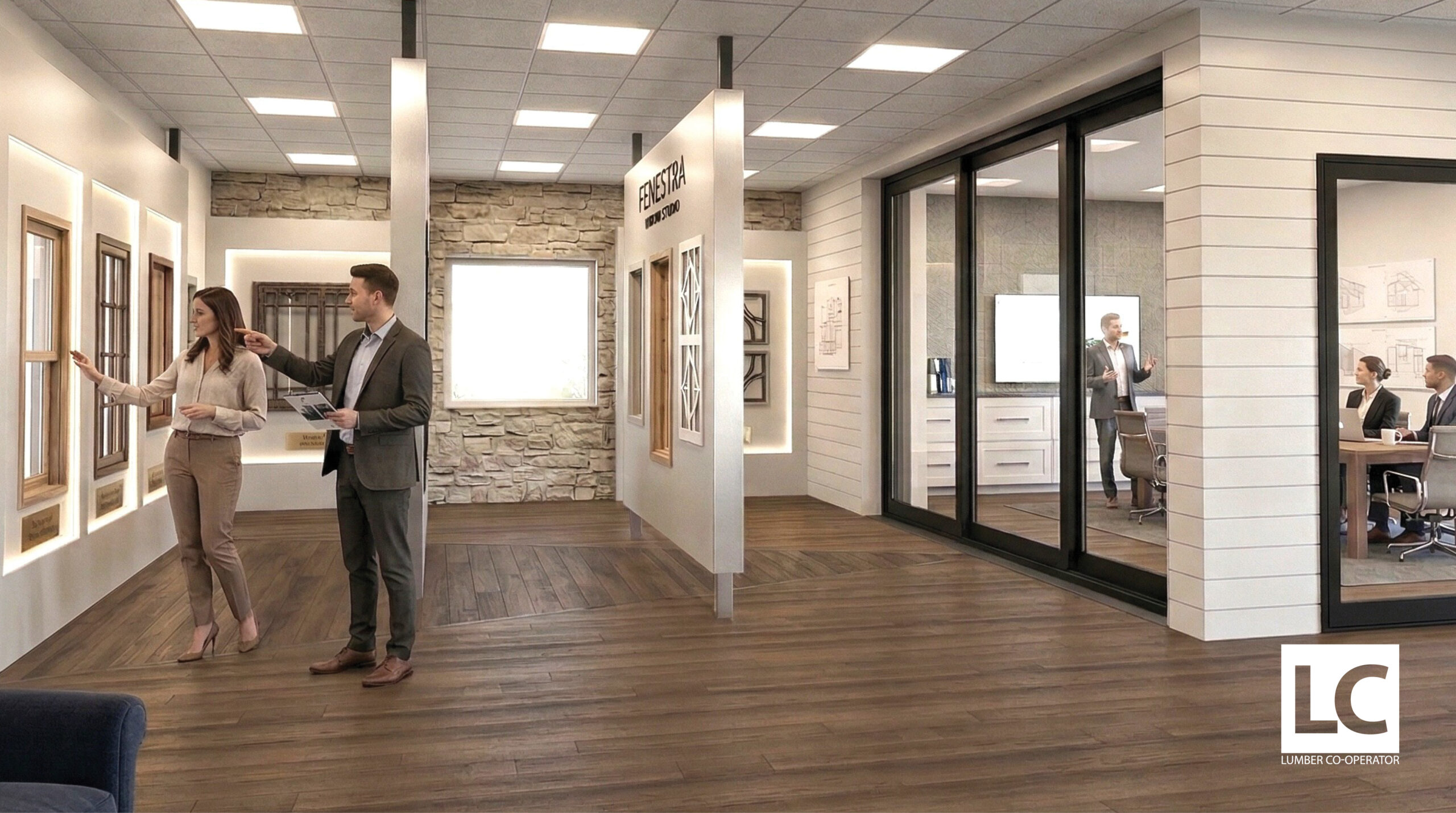
In an era where convenience often replaces brand loyalty, independent lumber dealers are facing a new kind of competition. It isn’t just the big-box store down the street anymore; it’s the infinite, frictionless world of e-commerce. To stay relevant, dealers must offer something a website cannot: a high-touch, immersive experience that builds immediate trust. However, a beautiful showroom is only half the battle. To truly thrive, dealers must overhaul their sales playbook to treat the physical showroom as an active, high-performing member of the sales team rather than a passive backdrop.
The Death of Aisle-and-Bin Thinking
For decades, the retail playbook for lumberyards was strictly utilitarian. The philosophy was simple: Put the product in a bin, put a price tag on the shelf, and wait for a contractor to ask for it. This is aisle-and-bin thinking. While it works for commodities like bulk fasteners or pressure-treated studs, it fails miserably for high-margin, high-consequence design decisions like windows, cabinetry, or fixtures.
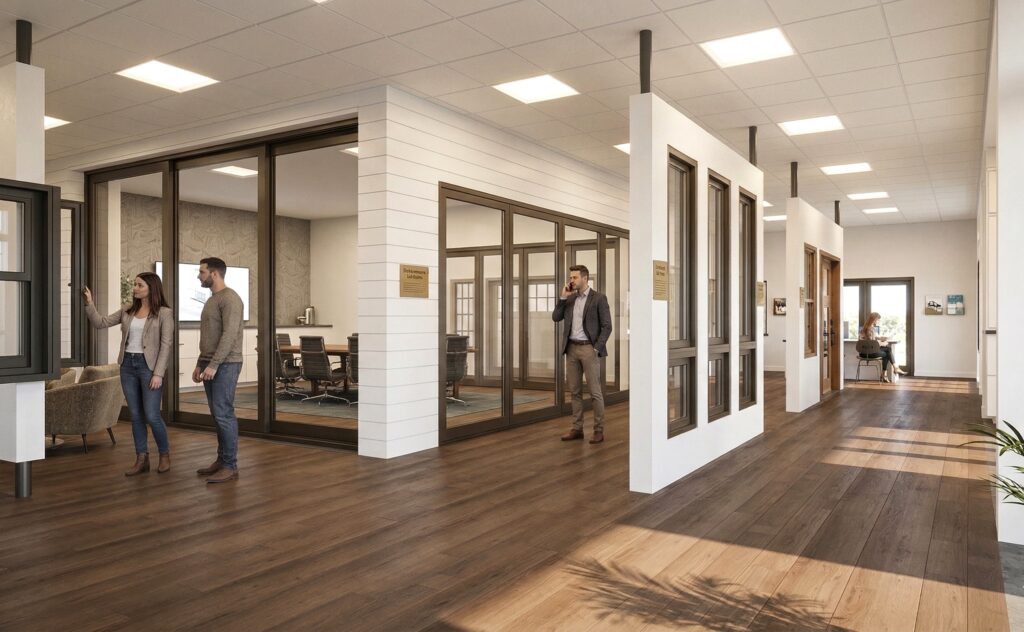
When approaching retail showroom design, we advocate a shift toward vignette-driven storytelling. Instead of a sterile wall of 50 disparate door handles, we show a door, a casing, and a handle integrated into a lifestyle moment. This allows your sales staff to stop being order-takers and start being guides. Instead of a window, you are selling the morning light in a renovated kitchen. By showing products in context, you remove the imagination gap that often stalls a sale.
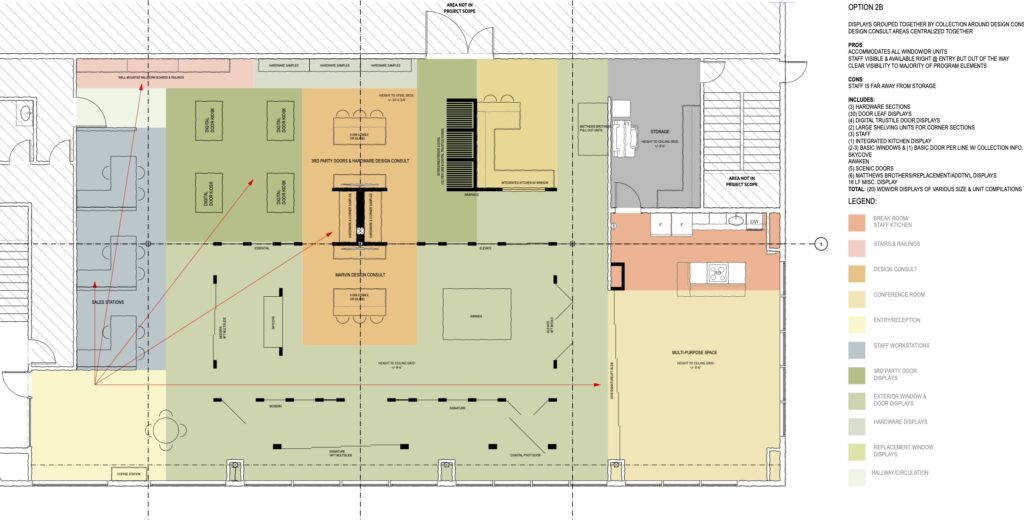
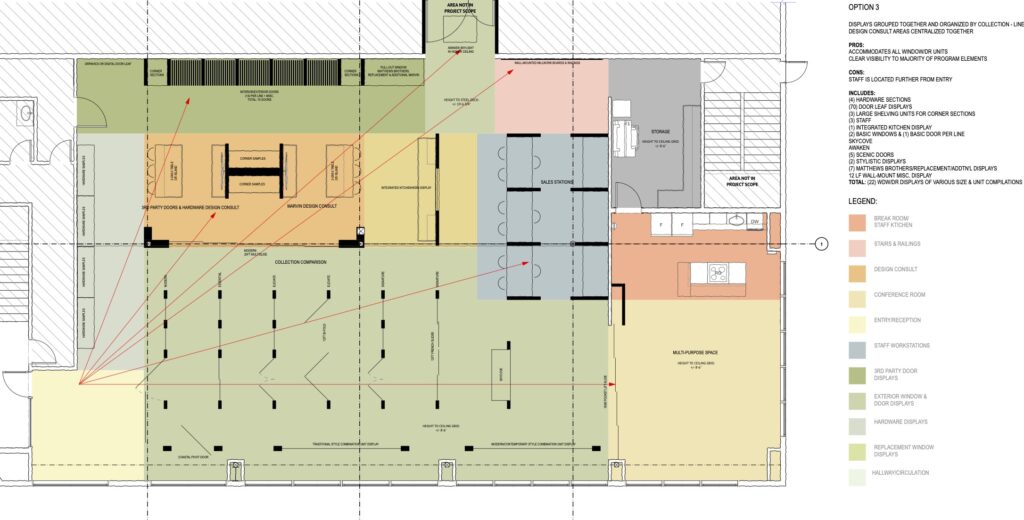
Showcasing multiple floor plan approaches to help dealers evaluate layout strategies and select the best fit for their showroom.
Choreographing the Journey
A high-performing showroom manages the customer’s cortisol levels. Most homeowners walk into a lumberyard feeling slightly out of their element, overwhelmed by technical jargon and the sheer volume of choices. The physical layout must act as a calming influence. This starts with the threshold, the first 10 feet of the store. If that space is cluttered with no smoking signs or stacks of clearance buckets, the customer’s stress rises. If it is open, well-lit, and features a clear hero display, they instantly feel they are in expert hands.
Beyond the entryway, the most critical design element is the Huddle Space. In the old playbook, sales happened over a high, laminate counter, which served as a physical barrier between the dealer and the client. In the new playbook, we design neutral zones. These are comfortable tables where a contractor, a homeowner, and a dealer can spread out drawings and material samples together. When you sit at the same level as your client, the psychology of the sale shifts from a transaction to a collaborative partnership.
Frictionless Technology
You don’t need robots in the aisles, but you do need digital assistants. The modern customer journey doesn’t end when they walk out the door. By integrating technology, like QR codes on vignettes that link to digital project inspiration galleries or instant spec sheets, you allow the customer to continue the sales journey on their own terms. This technology shouldn’t replace human interaction; it should empower your sales staff to provide more information with less friction.
The Silent Upsell
The goal of retail design isn’t just to look nice; it is to increase the average ticket size. A well-choreographed, technology-infused showroom performs a silent upsell by showing the customer what is possible. If a homeowner comes in for a front door but sees a beautifully lit display of integrated smart locks and matching exterior trim, the conversation naturally expands.
If your physical footprint doesn’t ask the customer, “What else are you building?” you are leaving money on the table. It’s time to rewrite the playbook and let your space do the heavy lifting. By aligning your physical layout with the modern customer journey, you turn your showroom into your most powerful competitive advantage. The future of the independent dealer isn’t in being a warehouse; it’s in being a destination.
MA+KE Architects provides architectural design services to the Upper Valley of Vermont and New Hampshire as well as all of Northern New England. Find them online at https://ma-ke-arch.com.