Billions of dollars—that is the scale of what the American Building Materials Alliance (ABMA) has protected for independent lumber and building material dealers through its advocacy in recent years. Through smart tax policy victories, regulatory reform, and pushing back on costly mandates, we’ve ensured our members can continue investing in their businesses and communities.
After many years serving in leadership roles across our industry, from the Retail Lumber Dealers Association of Maine to the NRLA and now as chair of ABMA, I’ve learned that meaningful progress rarely happens overnight. It takes persistence. It takes relationships. And, most importantly, it takes people willing to show up and stay engaged.
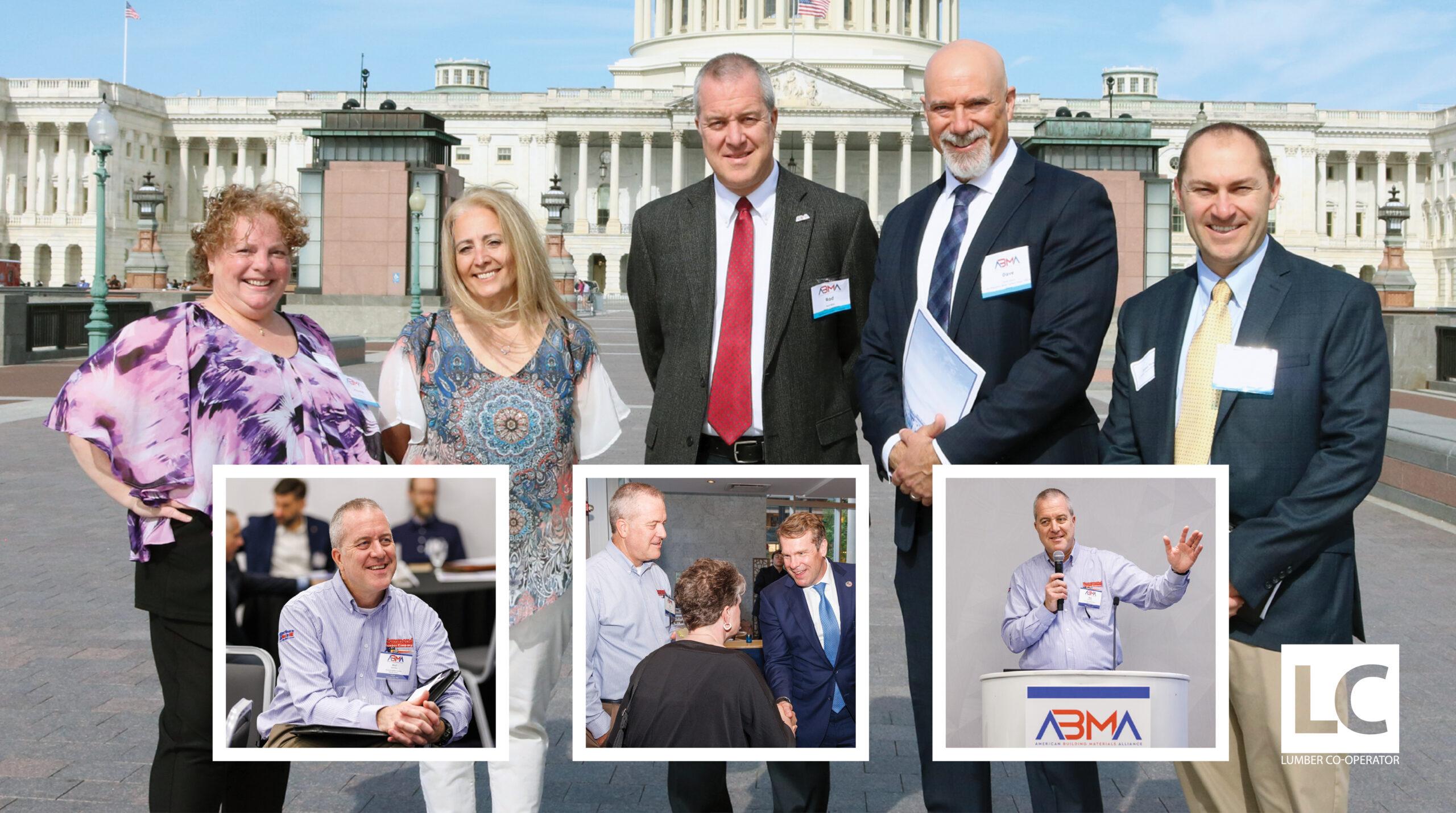
For many of us, our annual Advocacy Day trip to Washington has become something we build into our calendars because we know how important it is. Some of us have been coming for years, some for decades, but every time we return, we’re reminded of the same truth: When we show up together, we make a difference.
That is exactly what I’ve seen from ABMA members.
Record Engagement, Real Influence
As I approach the conclusion of my tenure as chair, I take immense pride in the transformation of this organization, not due to the efforts of a single individual, but rather because independent dealers, suppliers, and industry leaders consistently contribute their time, credibility, and expertise to this initiative.
And the results speak for themselves.
Advocacy Day attendance has reached record levels two years in a row. More members than ever are traveling to Washington to meet directly with lawmakers and regulators. First-time attendees are stepping forward. And policymakers increasingly recognize that our industry is not only essential to the economy but also central to addressing the nation’s housing challenges.
Last year, we came with a straightforward goal: Show up, make our case, and ensure our industry had a seat at the table. We weren’t looking for special treatment—we were explaining what our businesses need to keep growing, investing, and serving our communities.
And Congress listened.
We advocated for restoring 100% bonus depreciation, protecting the 20% S-corporation deduction, and advancing estate tax reforms that help family-owned businesses transition to the next generation.
Congress acted on all three.
We also raised concerns about the forced transition to all-electric commercial trucks—a mandate that would have significantly increased costs while reducing range and payload capacity. Policymakers didn’t just delay it. They repealed it.
And we stayed engaged on other regulatory issues as well, from the Corporate Transparency Act to overtime rules to OSHA proposals. We made sure our industry’s perspective was part of the discussion. We stayed at the table, explained the real-world impact, and saw results.
Expanding Our Reach and Shaping Policy
At the same time, ABMA has continued building a broader regulatory reform agenda focused on practical outcomes for small and independently owned businesses. One of the most important developments during this period was bringing Jim Thompson onto the ABMA team. Jim has delivered tremendous results for our members and elevated ABMA’s presence in Washington. His work opening doors and building relationships has expanded what this organization is capable of accomplishing.
Last fall, we released our housing policy proposal, Building Homes—Not Costs. The challenge in this country isn’t that we lack the ability to build homes; it’s that we’ve made it too expensive and too complicated to build them. Too many delays. Too many layers. Too many rules that add cost without adding value.
So we laid out a different approach: Reduce the cost of construction by addressing the real drivers: regulatory burden, permitting delays, and inspection bottlenecks.
We brought that plan to Washington. We worked with the White House, with Congress, and with federal agencies. And just weeks ago, the president signed an executive order directing the federal government to identify the regulatory costs affecting new construction and fix or eliminate them—the core of what we called for.
Now Congress is working on bipartisan legislation that goes even further. That’s why we returned to Washington this spring, to help move it across the finish line.
We’re also continuing our work on credit card fees, an issue every one of us deals with daily. For many members, swipe fees have become one of the top costs of doing business. The Credit Card Competition Act aims to introduce real choice into a market that hasn’t had enough of it, and competition leads to better outcomes.
We’re also pushing forward on regulatory reform through the PROVE IT Act, a simple idea: If the federal government is going to regulate small businesses, it should have to demonstrate the cost. And small businesses should have a meaningful way to raise concerns when those costs are overlooked.
Some of our most important wins this year didn’t make headlines. They came in the form of stability, ensuring that major policy changes didn’t disrupt our supply chains and that our industry had the certainty it needs to operate and plan.
A Collective Effort, a Shared Success
These accomplishments did not happen because ABMA is the largest organization in Washington; we’re not. They happened because our members show up with credibility, practical experience, and a willingness to engage constructively.
That approach has changed the way our industry is viewed. And while there is still plenty of work ahead, I believe ABMA is entering its strongest chapter yet.
Serving as chair has given me a front-row seat to that progress. I’ve watched this organization grow from a determined voice to a respected force. I’ve seen members walk into congressional offices with confidence and walk out knowing they made a difference. Those moments remind me why this work matters.
When we look at the past year, this isn’t just progress—it’s momentum. And it didn’t come from one person or one office. It came from all of us. Showing up. Speaking up. Sharing our experiences. Staying engaged.
To everyone who has traveled to Washington, attended meetings, supported the effort, or simply stayed engaged, thank you. We’ve got momentum behind us. Let’s keep it going.
For more articles like this, go to our LC Articles page or subscribe to receive the LC.